
Online Demo Product: Discover Sortivo for Automated Sorting of Zebrafish Larvae
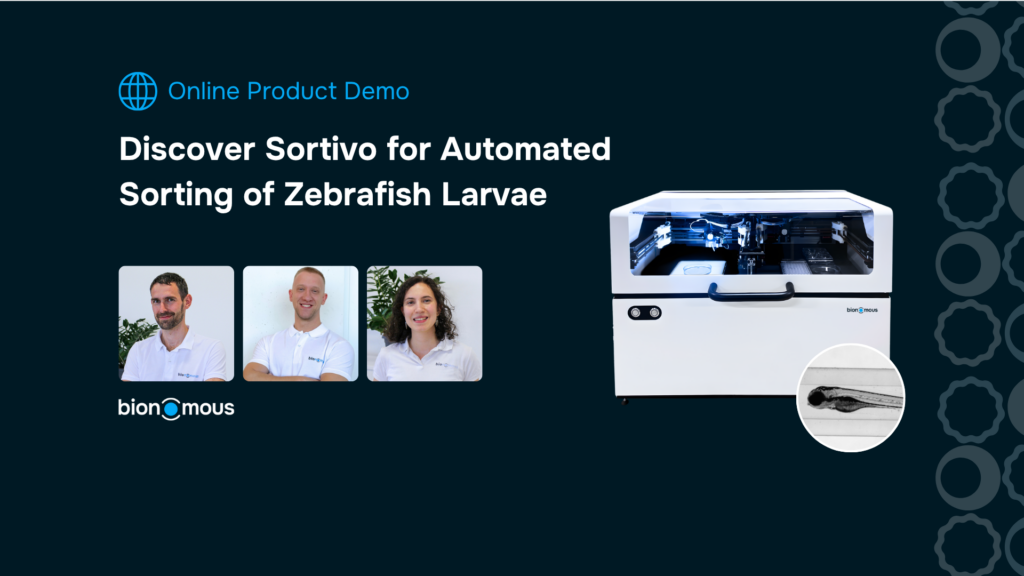
Get access to the recording of the Online Demo Product! Manual picking, phenotyping, and plating of zebrafish larvae under a stereomicroscope is slow, biased, and limits throughput. In this on-demand recording, see Sortivo™, Bionomous’ compact benchtop platform, in action: gentle continuous-flow fluidics, high-resolution imaging, and an embedded AI classification engine to automate picking, 360° orientation […]
Webinar: Automated Workflows for Zebrafish Embryos and Organoids
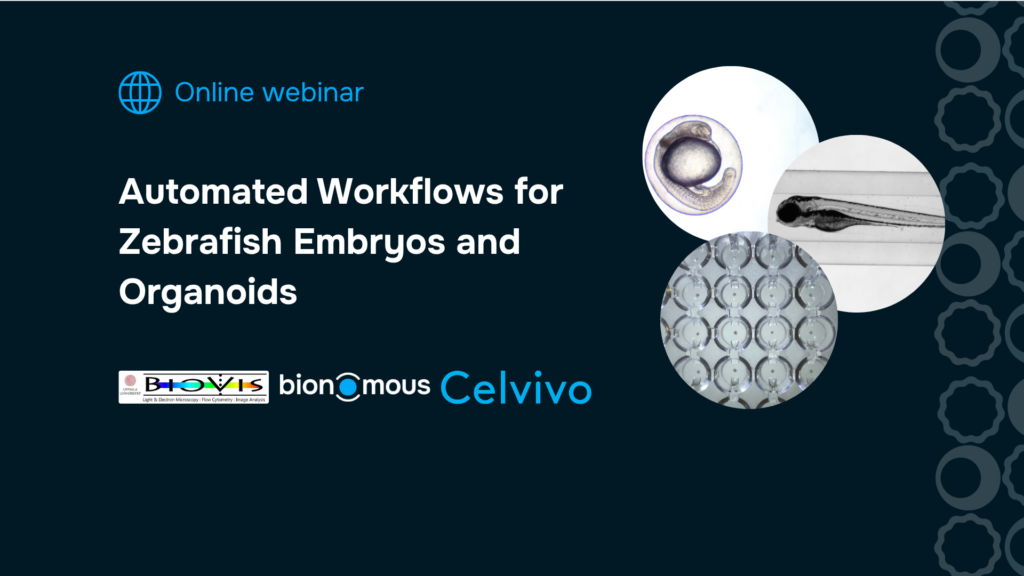
Get access to the recording of the Webinar! Manual manipulation of zebrafish embryos, larvae, and organoids creates real technical bottlenecks: low throughput, inconsistent results, and hours of hands-on work. In this webinar, hosted jointly by BioVis Uppsala, Bionomous, and Celvivo, discover how automation solves these challenges, covering automated sorting and screening workflows for zebrafish and […]
How Automation is Advancing Fish Models in Toxicology

When it comes to toxicology, fish embryo offer something rare: models that are fast, ethically sound, and biologically relevant. But as research scales up, manual workflows can become a bottleneck, limiting both speed and reproducibility. In this month’s article, we explore how automation is changing the game, helping labs unlock the full potential of fish […]
Stronger together: how NAMs can be combined to achieve more predictive results
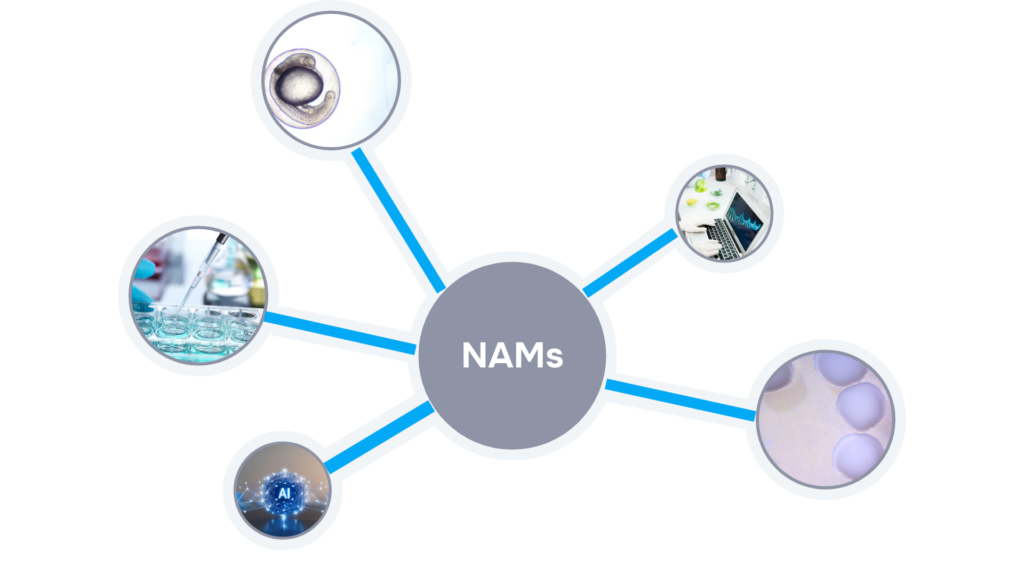
New Approach Methodologies (NAMs) are increasingly used to study biological effects in more human-relevant and ethical ways, yet each model captures only part of the picture. In this month’s article, we explore how combining complementary NAMs, such as 3D cell cultures (e.g. organoids and spheroids) and zebrafish embryos, can help strengthen interpretation and improve confidence […]
From Manual Handling to Automation: The Future of Zebrafish Embryo Workflows
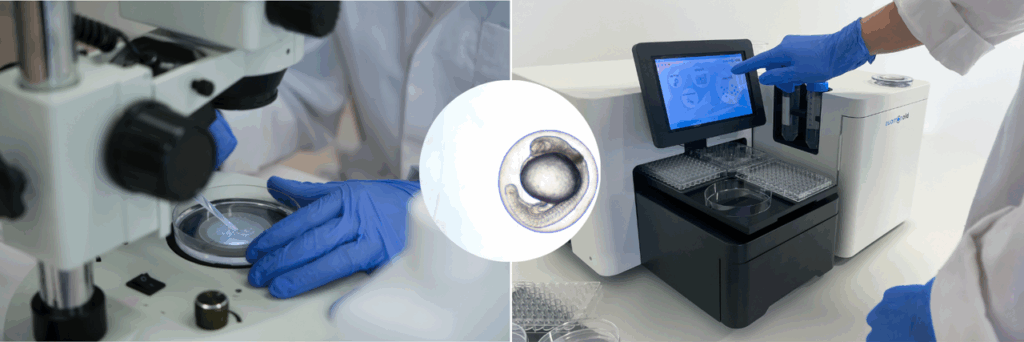
Handling zebrafish embryos may seem simple, but doing it at scale is often a real challenge. This month’s article explores how workflows are shifting toward automation to support higher throughput, better reproducibility, and streamlined research processes. Introduction Current Workflows in Zebrafish Embryo Research The Role of Automation Applications in Drug Testing, Toxicity & More Conclusions […]
EvoDevo in Zebrafish: Bridging Evolution, Development, and Drug Discovery
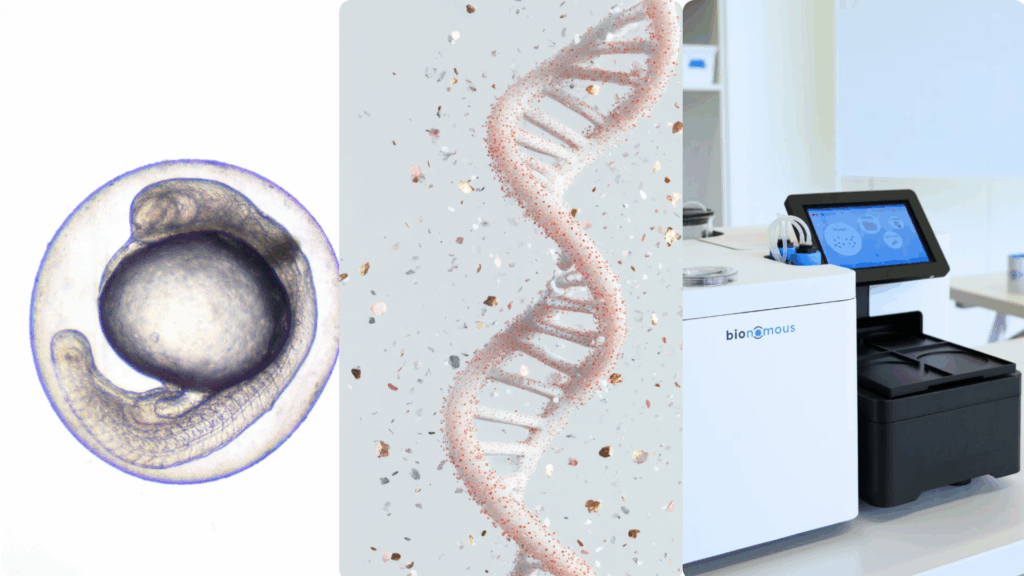
Evolutionary Developmental Biology, also known as EvoDevo, explores how developmental processes shape evolutionary change. Zebrafish, with their unique genetic and developmental features, have become a cornerstone for EvoDevo research and a powerful tool for drug discovery and toxicity testing. This article introduces the science behind EvoDevo, the advantages of zebrafish as a model, and how […]
How can zebrafish eggs help us understand climate change?
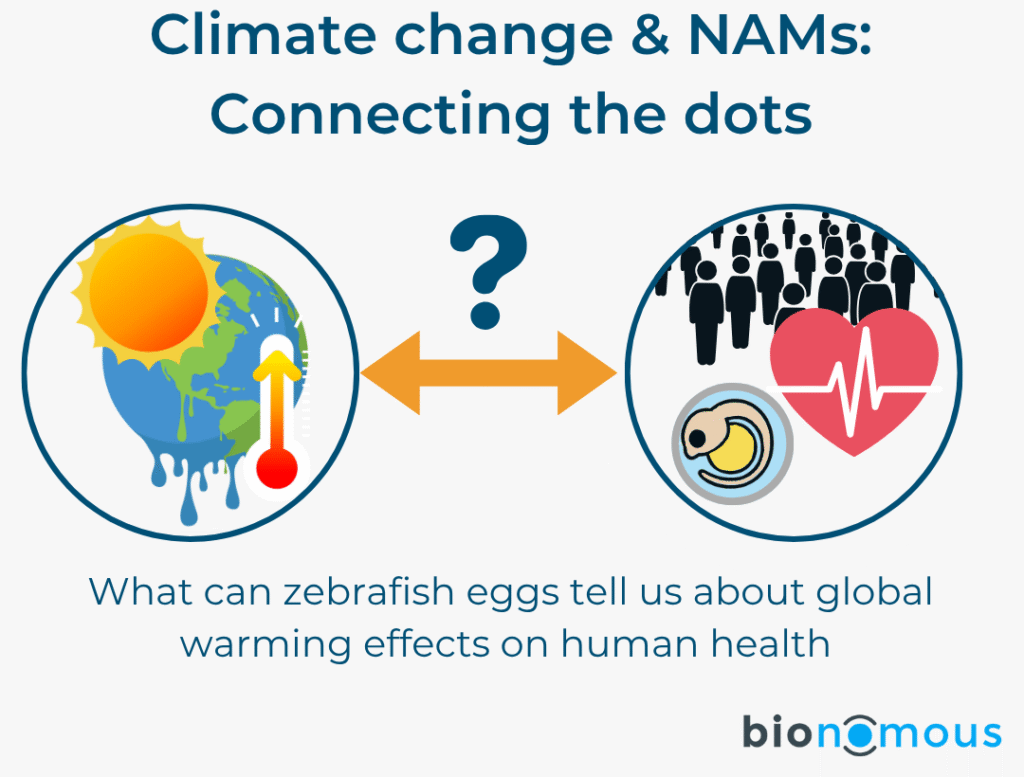
The last decade was the hottest on record, and its consequences go far beyond melting glaciers. Climate change is disrupting ecosystems, threatening food security, and putting human health at risk. To address these complex challenges, scientists need research tools that are not only robust and predictive but also ethical and scalable. That’s where New Approach […]
From promise to practice: Why alternatives to animal testing aren’t yet scalable
As described in last month’s article, New Approach Methodologies (NAMs) and Non-Animal Technologies (NATs), like organoids or fish eggs, are transforming the landscape of biomedical research, toxicology, and drug development. By offering human-relevant insights while reducing or replacing animal use, they hold the promise of more ethical, predictive, and cost-effective science. So, what’s limiting their […]
Towards a future beyond animal testing?

As spring fades into summer and nature bursts into full bloom, it is a fitting time to reflect on scientific approaches that promote innovation while advancing more ethical and sustainable research practices. This past spring was filled with events and initiatives that energized the research community and accelerated the development of forward-thinking solutions. Among them, […]
Verena Zimermann, zebrafish and the Jazwinska Group
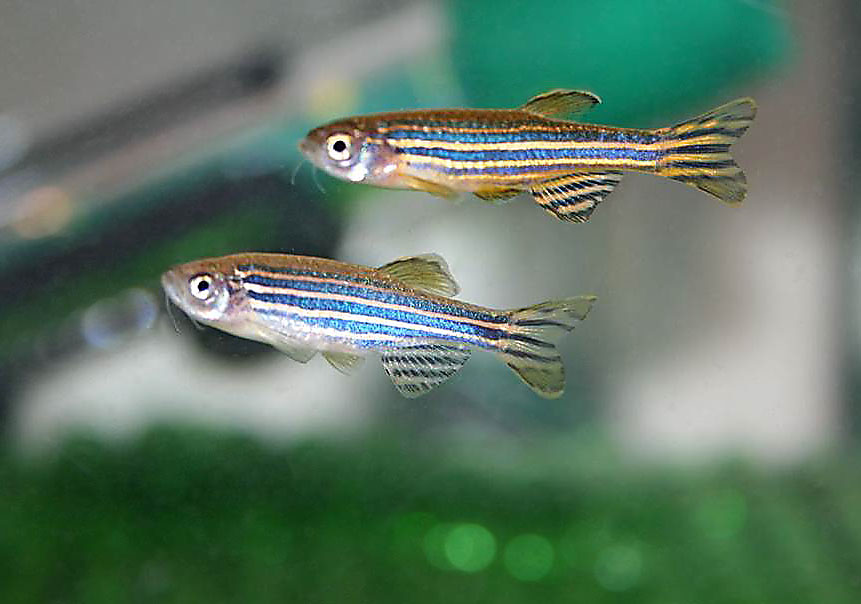
New year, new beginning! That is particularly true for Verena Zimmermann, who retired in December 2024 from her role as a laboratory technician at the Jazwinska Group (University of Fribourg, Switzerland). Verena’s career The Jazwinska Group Verena’s retirement References Verena’s career Before joining the Jazwinska Group, Verena had worked for both companies and academic research […]