
Stronger together: how NAMs can be combined to achieve more predictive results
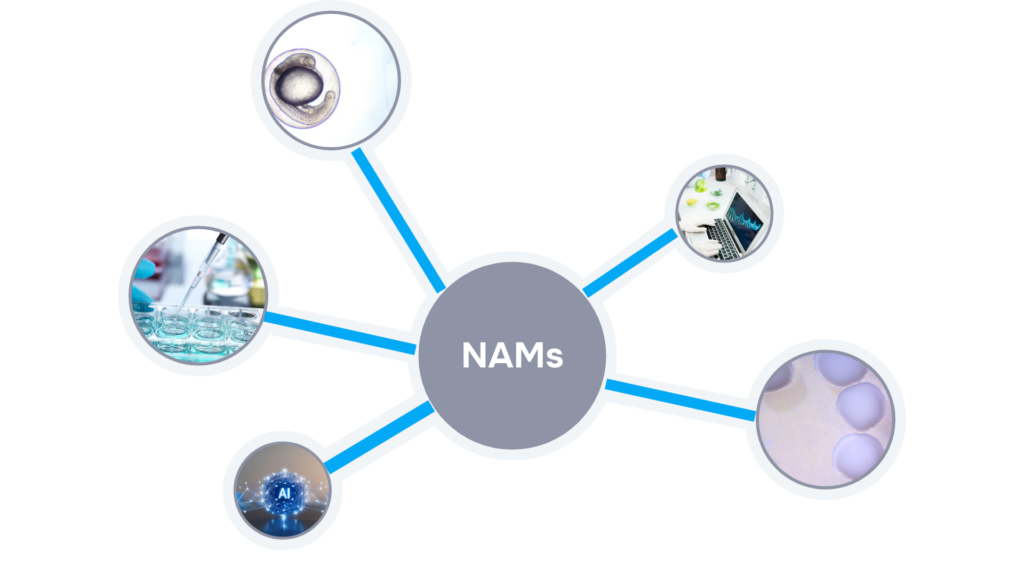
New Approach Methodologies (NAMs) are increasingly used to study biological effects in more human-relevant and ethical ways, yet each model captures only part of the picture. In this month’s article, we explore how combining complementary NAMs, such as 3D cell cultures (e.g. organoids and spheroids) and zebrafish embryos, can help strengthen interpretation and improve confidence […]
From Manual Handling to Automation: The Future of Zebrafish Embryo Workflows
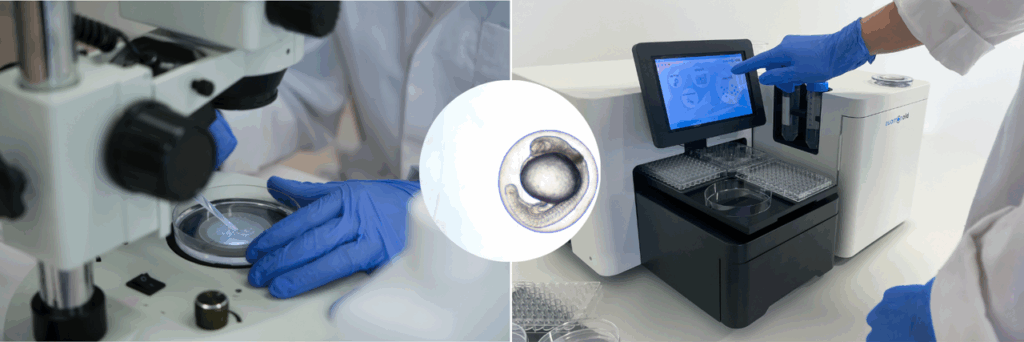
Handling zebrafish embryos may seem simple, but doing it at scale is often a real challenge. This month’s article explores how workflows are shifting toward automation to support higher throughput, better reproducibility, and streamlined research processes. Introduction Current Workflows in Zebrafish Embryo Research The Role of Automation Applications in Drug Testing, Toxicity & More Conclusions […]
Using zebrafish for drug testing

Toxicology studies have proven to be quite translatable from zebrafish to mammals. As a matter of fact, concordance between studies ran on zebrafish and rodents can reach up to 87% (1). Therefore, the use of zebrafish in the fields of pharmacology and toxicology is opening new and innovative ways to test and develop new drug compounds and […]