Image-based screening, sorting and plating of heterogeneous biological entities from 300 µm to 2 mm — fish larvae, organoids and other 3D cell cultures — with high-resolution imaging and AI classification for complex samples.
Save time, reduce errors, and improve outcomes with AI-powered precision.
Built for complex particles
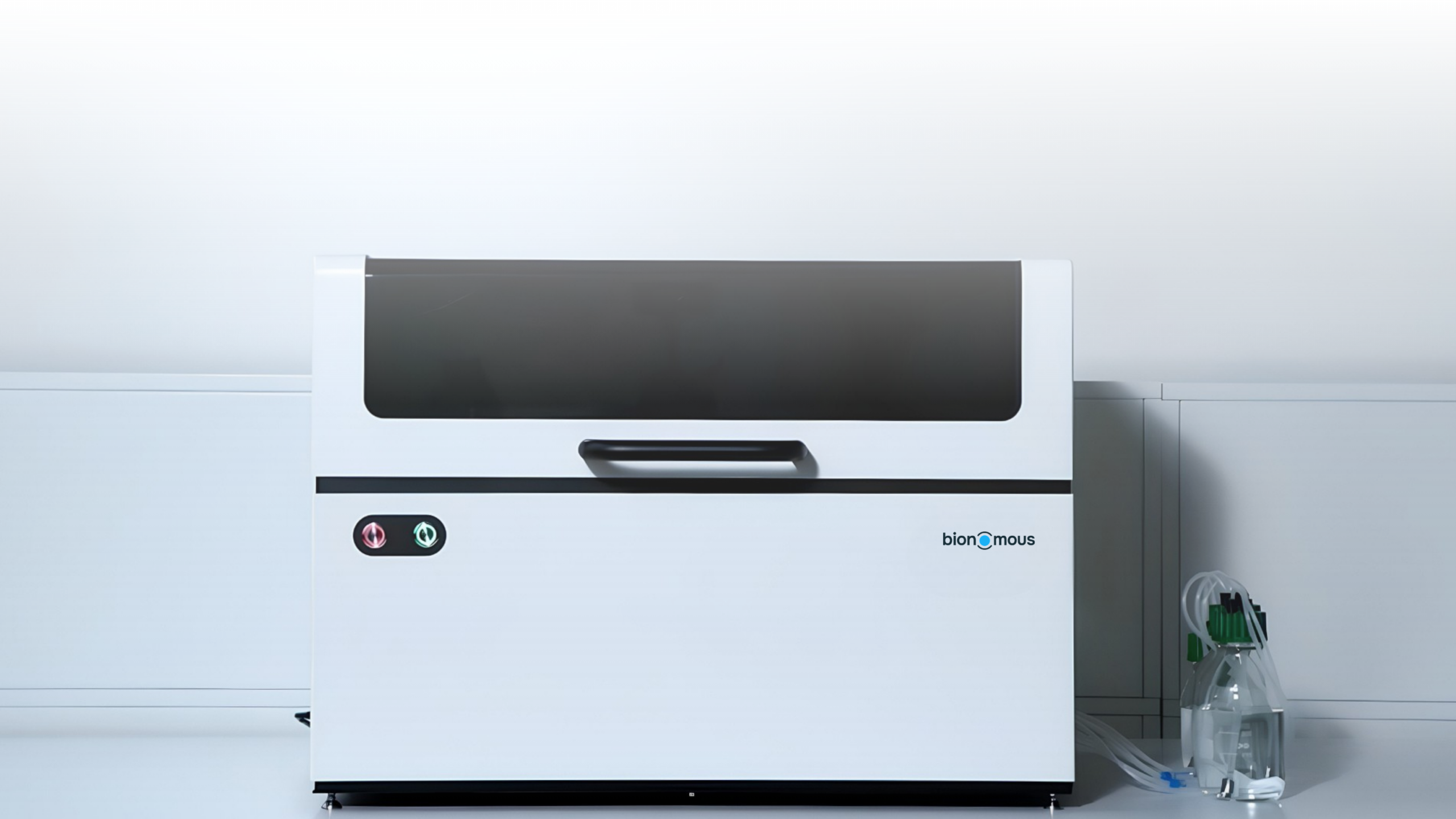
Sortivo handles what FACS can’t and what manual pipetting can’t keep up with: 300 µm to 2 mm fragile entities. Gentle picking from fish larvae to organoids.
One compact platform
From input plate to assay-ready plate in a single workflow, with every entity image & analysis linked to its output position.
Standardize your sorting
Adjust algorithms to sort by specific biomarkers or morphological features, applying AI precision to every project—and ensuring reproducible results across experiments.
Recognised with the New Product Award at SLAS Europe 2026
How does automated sorting work?
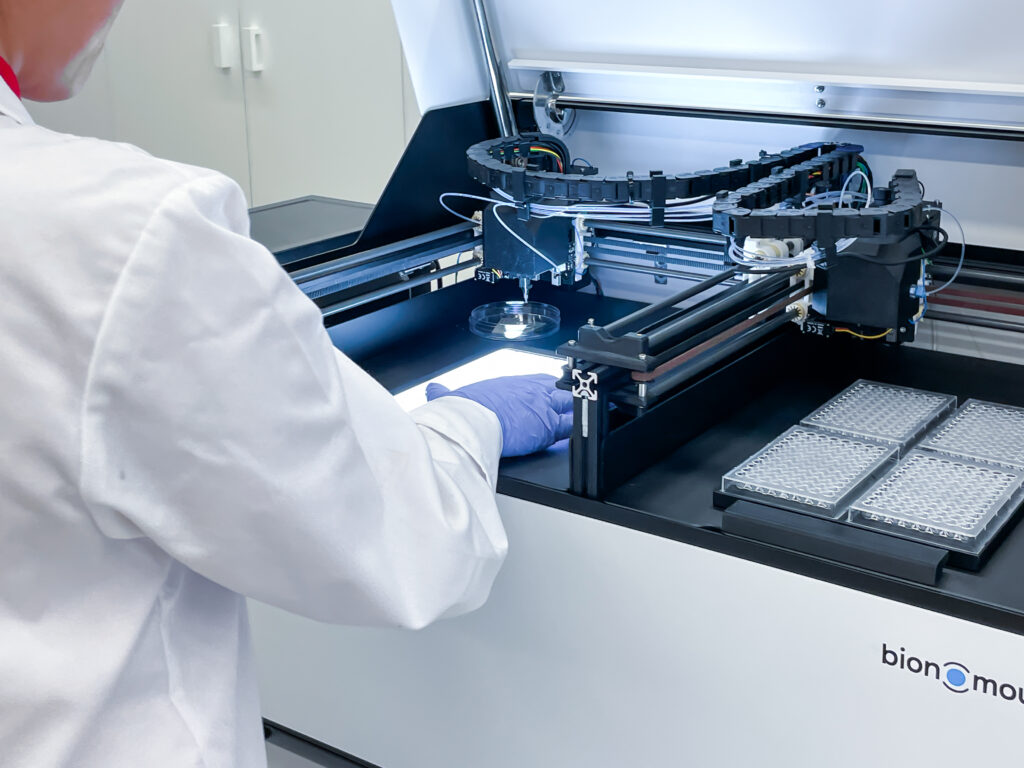
Sortivo’s continuous workflow follows four steps: picking, screening, AI sorting, and plating.
Picking
Smooth, individual picking from Petri dishes or 6-96-well plates.
Screening
360º imaging in brightfield and up to 6 fluorescence channels.
AI Sorting
AI classification on morphology and fluorescence with a manual mode always available.
Plating
Single-entity plating into Petri dishes or 6-384-well plates, with image + data per output position.
High-resolution screening: every angle, every detail
The device integrates an AI-driven classification engine with a 360° imaging module featuring multi-channel fluorescence and brightfield capabilities to detect all details.
Designed for NAMs, flexible across models
Sortivo handles complex biological entities from 300 µm to 2 mm. Validated today on zebrafish larvae and organoids and ready for the next model on your bench.
Zebrafish larvae
Automated sorting of 2–7 dpf zebrafish larvae (up to 5–6 mm). Pre-installed AI handles morphology, organ recognition and fluorescence localisation.
If your samples are between 300 µm and 2 mm, and need to be screened individually with imaging, Sortivo is likely a fit. Let’s discuss your application.
At the Leibniz Institute on Aging – Fritz Lipmann Institute (FLI), we are using the EggSorter for sorting Nothobranchius furzeri wild type eggs onto plates containing coconut substrate. The EggSorter has proven to be a highly reliable and efficient tool in our workflow, significantly streamlining the egg-sorting process.
We are very satisfied with its performance. The system operates with very high precision and consistency, helping us to save time and standardize a previously labor-intensive step. The EggSorter fully meets our expectations and has become an indispensable part of our daily work with N. furzeri embryos
— Beate Hoppe, Facility Manager, Leibniz Institute on Aging – Fritz Lipmann Institute (FLI)
Our goal was to robotize the sorting of the fish eggs to improve our productivity. We acknowledge the perseverance of Bionomous to solve technical difficulties and successfully deliver the tool adapted to our specific needs. The eggsorter dedicated to Medaka fish eggs facilitates the work of our technicians.
The Bionomous EggSorter saves me valuable time in the laboratory while ensuring accurate and reliable results. Thanks to its automation, I can focus on my experiments/other tasks without worrying about repetitive sorting tasks.
Page Lab | Louvain Institute of Biomolecular Science and Technology (LIBST)
The Bionomous EggSorter has streamlined our zebrafish workflow by automating tedious manual tasks and saving us valuable time. Its efficiency makes it an ideal tool for modern zebrafish research and breeding programs.
Zebrafish Core Facility | Centre for Comparative Medicine Research (CCMR), University of Hong Kong
The EggSorter system has been evaluated in technical trials for the classification of sea bream and bluefin tuna eggs, showing potential to support the assessment of spawning quality in research contexts. It may also have applications in commercial marine hatcheries, particularly if further improvements in processing speed continue to be implemented.
Aurelio Ortega, Head of Aquaculture Department | Spanish Institute of Oceanography (IEO - CSIC)